Macrame vs Tapestry: What's the Difference? (And Which to Buy)
The short answer: macrame is made by knotting cord, while a tapestry is woven on a loom. Knotting creates open, sculptural texture; weaving creates a denser, more image-like surface. Both make excellent wall art — they just serve different looks.
How macrame is made
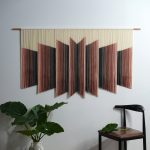
Macrame uses a small set of knots — mainly the square knot and half hitch — worked by hand into cord or rope. The result is open, dimensional and full of shadow. It reads as sculptural, and it works especially well in boho, coastal and minimalist rooms. Pieces like our Black & Gray Ombre piece show how much depth knotting can create.
How tapestry is made
A tapestry is woven: warp threads run vertically and weft threads are packed in horizontally to build an image or pattern. Woven pieces hold finer color detail and a flatter surface. Hand-dyed woven wall art, such as Mountain Lake piece, can carry landscape-like gradients that knotting alone can't produce.
Texture and light
- Macrame — open weave, strong shadows, catches light between strands. Visually light, even at large sizes.
- Tapestry — denser surface, softer shadow, holds color more evenly. Feels more like a textile "painting."
Which lasts longer?
Both are long-lasting when cared for. Macrame's open structure means dust falls through rather than settling in. Woven tapestries hold more dust in the fibers and benefit from gentle shaking and occasional vacuuming with a brush attachment. Keep either out of direct sunlight to protect natural dyes.
Which should you buy?
Choose macrame if you want texture and dimension with a casual, relaxed feel. Choose a tapestry if you want a defined image or color field. Many of our pieces combine both — woven bodies with knotted fringe or layered cord. Compare them all in the wall hangings collection.
Related reading
How to hang a macrame wall hanging and how to care for a woven wall hanging.


You must be logged in to post a comment.